
Proof of an Old Universe
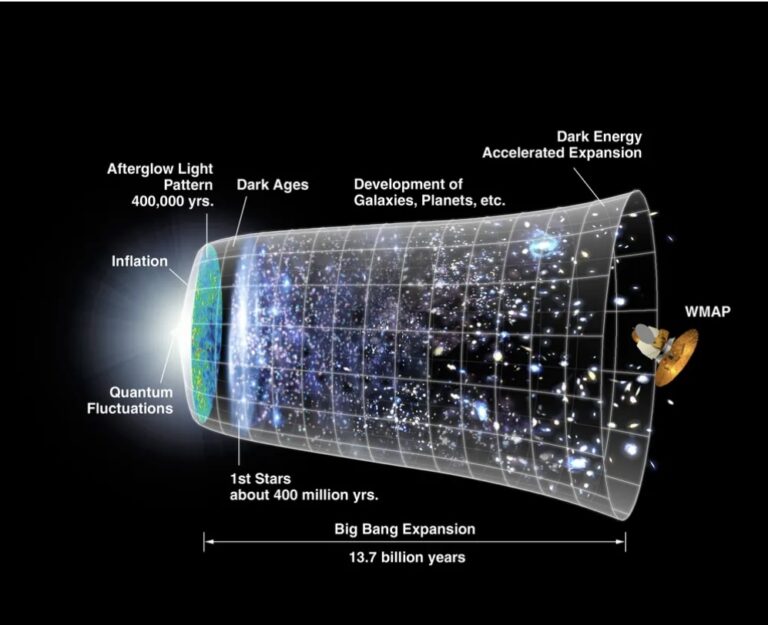
The universe is 13.79 Billion years old. There are at least five different independent measurement methods that yield the same date with relatively small +/- error rates. Here are four of them.
- Cosmic Background Radiation – measures how cool the universe is now and works backwards, through meticulous temperature variable maps, to determine the age.
- The Expansion Rate – if we know the rate at which something is expanding, we can work backwards to find out when it first started expanding. Hubble’s Law is used here. The Tolman test proves categorically a constantly expanding universe.
- Stellar Burning Rates– because stars burn in a vacuum and involve only Hydrogen and Helium in fusion reactions, ages of stars can be determined with great accuracy. Colour-magnitude fingerprints.
- Radioactive Decay: Supernova explosions release radioactive isotopes. The more of the parent material that exists in comparison to the decay product, the younger the supernova & visa versa. Radioactive decay rates are used as a very accurate measure of time.
Unfortunately, such a young universe presents a real problem for atheists because it is far too short to allow for biological evolution – the earth is 4.5 Billion years old – and it’s far too old for the young earth creationists who believe the universe and the earth are only 10,000 years old.
Why did God need to take such a long time to create the universe and earth when he could have created it in an instant?